

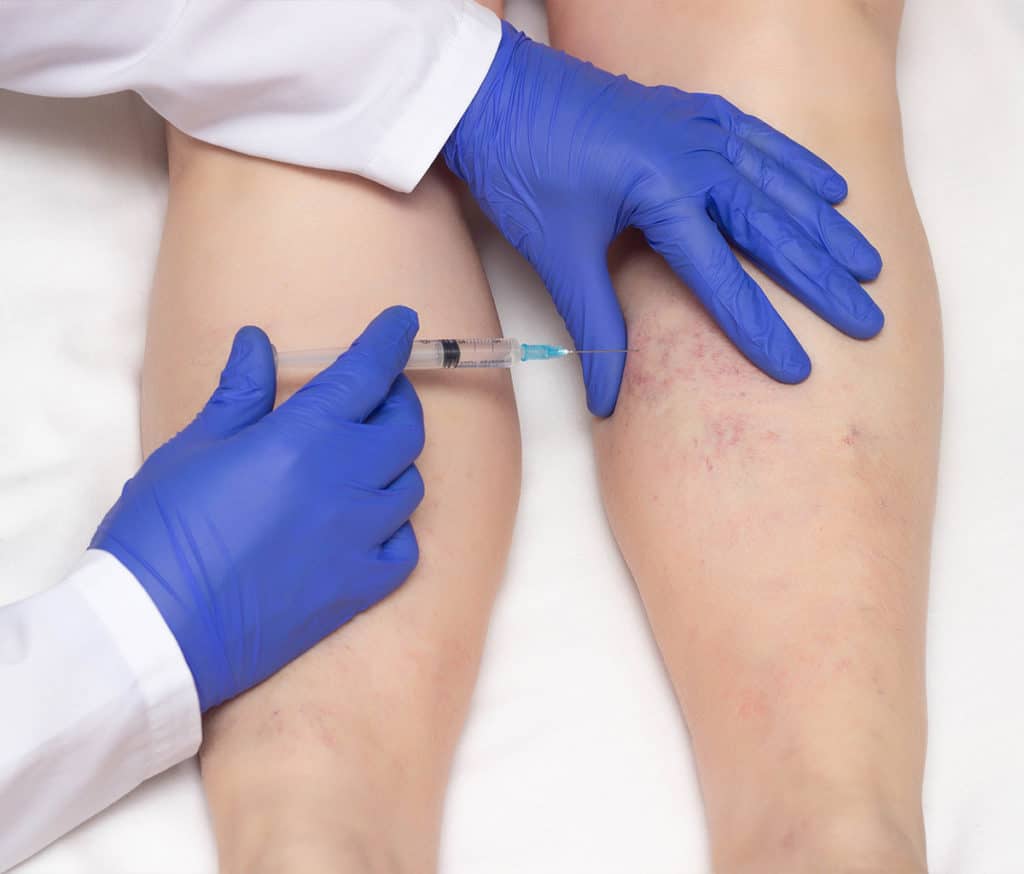
Sclerotherapy is a procedure used to treat varicose and spider veins, and it involves injecting a solution into the vein. This process closes the vein, allowing blood to flow through nearby healthy veins. The treated vein may eventually fade from view. Become familiar with the process so you can prepare.
The Sclerotherapy Procedure
Sclerotherapy is typically performed in a clinical setting, since you can be treated and observed there. Lie down with your legs up as the treatment area is exposed and prepared. The skin around the vein is cleaned. Your provider may mark targeted veins for accuracy. Using a fine needle, a sclerosant solution is injected directly into the vein. Sometimes, you feel a mild stinging or burning sensation. Tell the provider if it is more than mildly painful. The entire process usually takes under an hour, making scheduling more convenient. After each injection, the area may be massaged to help disperse the solution. You may be asked to change positions during the procedure to improve the provider’s access. Your provider will monitor your response throughout treatment, and they can answer any questions you have.
The Recovery Instructions
Recovery after sclerotherapy is generally straightforward, and you can get up and walk soon afterwards. This supports healthy blood flow. Walking is encouraged to minimize the risk of clotting. Your provider may advise you to wear compression stockings for a period of time. These garments maintain pressure on treated veins. Wearing stockings as instructed supports your recovery. Avoid activities that affect recover, at least for a few days. This includes avoiding the sun. Most people return to their routine the same day. Always follow your provider’s specific instructions, and this will help you manage daily responsibilities. Your provider may suggest checking your progress with follow-up visits and will address any questions you have. Reach out for guidance if you notice redness, swelling, or discomfort that concerns you. Follow your provider’s recommendations to support your recovery and enhance your overall experience.
The Risks and Warning Signs
Sclerotherapy has some potential side effects. Know what to watch for during recovery. You may notice bruising at the injection site, which generally fades within a few weeks. Raised red areas can also appear, and they tend to resolve on their own. It is normal for the skin around treated veins to develop spots or lines. These may fade over time, but sometimes they persist. Tell your provider about all side effects you notice. Small skin sores may also develop at the injection site.
If you notice a sore, keep the area clean and let your provider know at your next visit. Multiple tiny red blood vessels can also appear near the treated area. Let your provider know if you see any new or persistent skin changes during your recovery. Do not wait for them to worsen. Most side effects do not require special treatment, and they often resolve during the healing process. Your provider will review potential effects, and they will advise you when to seek medical advice. Talk to your provider about these options to better understand the treatment. Set reasonable expectations and determine next steps.
Take Your Next Step
Before proceeding with sclerotherapy, a thorough consultation is recommended. This meeting allows you to discuss your medical history and address any concerns. Your provider will evaluate your veins. They will determine if you are a suitable candidate. Ask questions, and confirm the procedure aligns with your health goals. Make an informed decision about your care.
- How to Compare Different Types of Health Protection Plans
- Turn Your Wellness Vision into Reality: Finding the Right Private Label Supplements Manufacturer
- Business Leaders: What to Look for in Enterprise PPM Software Solutions
- How Hiring a Local Plumber Transforms Your Emergency Plumbing Situation?
- Recognizing the Signs of ADHD in Children
Social Sharing
Your Content Goes Here
Latest Posts