

Your gut does much more than digest food. The digestive system breaks down the foods you eat, absorbs nutrients, moves waste through the body, and provides a home for trillions of microorganisms that make up the gut microbiome. What you eat can influence this complex environment, which is why choosing a wide variety of nutritious foods is an important part of supporting digestive and overall health.
When people search for the best foods for gut health, they often expect a short list of special foods that can quickly transform digestion. The reality is more practical. There is no single food that works for everyone, and there is no perfect “gut health diet.” A healthier approach is to build meals around a variety of plant foods, fiber-rich foods, fermented foods, adequate fluids, and other nutrient-dense ingredients.
Research continues to show that diet has an important influence on the gut microbiome. Different dietary patterns can affect the composition and activity of microorganisms in the digestive tract, although individual responses can vary considerably.
Fiber deserves particular attention. Many types of dietary fiber reach the large intestine, where gut microorganisms can use them as substrates. During this process, microbes produce compounds such as short-chain fatty acids, which are involved in several aspects of human physiology.
Fermented foods are another interesting part of the conversation. Foods such as yogurt, kimchi, sauerkraut, and certain other fermented products may contain microorganisms, but not every fermented food qualifies as a probiotic food with proven health benefits. The type of food, processing method, and microorganisms involved all matter.
For that reason, the best strategy is not to chase one trendy ingredient. Instead, think about your overall eating pattern. A colorful plate containing vegetables, fruits, whole grains, beans, nuts, seeds, and appropriate fermented foods may provide a broader range of fibers and plant compounds than a diet centered on a few “superfoods.”
This guide explains the best foods for gut health, why they may be useful, how to add them to everyday meals, what to know about probiotics and prebiotics, and how to build a realistic gut-friendly eating routine.
What Is Gut Health?
Gut health generally refers to the condition and function of the digestive system and the complex microbial community that lives throughout the gastrointestinal tract.
The gut microbiome includes many different microorganisms. These microorganisms interact with food components, each other, and the human body. Researchers are still learning exactly how individual microbes and microbial communities affect health.
One important point is that “more bacteria” does not automatically mean “better gut health.” The gut is an ecosystem, and balance, diversity, function, and the interaction between microbes and their environment all matter.
Diet is one of the factors that can shape this ecosystem. Research reviews have found that dietary patterns, including differences in fiber intake and the amount and variety of plant foods consumed, can influence the gut microbiome.
This is why gut-friendly eating is usually better understood as a long-term pattern rather than a quick fix.
Why Food Matters for Gut Health
Food affects the gut in several ways.
First, food provides nutrients needed by the body. Second, certain carbohydrates and fibers that are not fully digested in the small intestine can reach the colon, where microorganisms can ferment them. Different fibers have different properties and can have different effects.
Third, foods contain plant compounds and other substances that interact with digestion and metabolism.
The Hospital Central Connecticut
This means two people can eat the same food and experience somewhat different effects. Personal tolerance, existing digestive conditions, overall diet, medication use, stress, sleep, and other factors can all influence how someone feels.
A useful goal is therefore not to find one magical food. It is to create an eating pattern that provides variety and enough nutrients while fitting your individual needs.
Best Foods for Gut Health
There are many nutritious foods that can fit into a gut-friendly eating pattern. The following foods are especially useful because they provide combinations of fiber, plant compounds, nutrients, or live microorganisms.
Yogurt With Live Cultures
Yogurt is one of the most practical fermented foods for people looking to support their diet with live microorganisms.
Some yogurts contain live cultures, and certain products also contain specific probiotic strains. However, it is important to remember that not every fermented food contains probiotics with proven health benefits. The NIH notes that probiotic effects depend on the particular microorganism and strain.
For an everyday choice, plain or lower-added-sugar yogurt can be a flexible option.
You can combine yogurt with:
- Berries
- Oats
- Chia seeds
- Ground flaxseed
- Walnuts
- Bananas
This creates a simple meal containing protein, fiber, and a variety of plant foods.
Oats
Oats are an easy source of fiber and can be used in breakfast, snacks, and homemade recipes.
Oatmeal can be combined with fruits, nuts, seeds, or yogurt to create a more diverse meal. Oats also provide beta-glucan, a type of soluble fiber.
Instead of buying heavily sweetened flavored oatmeal every day, try making plain oats and adding your own ingredients.
For example:
- Oats + blueberries + walnuts
- Oats + banana + chia seeds
- Oats + strawberries + plain yogurt
- Overnight oats + flaxseed + berries
The bigger lesson is that one food becomes more valuable as part of a varied meal.
Beans
Beans are among the most useful foods for increasing dietary fiber.
Black beans, kidney beans, pinto beans, navy beans, chickpeas, and other legumes can provide fiber, plant protein, vitamins, and minerals.
They can be added to:
- Soups
- Salads
- Burrito bowls
- Chili
- Grain bowls
- Wraps
- Vegetable dishes
If you are not accustomed to eating many beans, increase the amount gradually. A sudden large increase in fiber can cause temporary gas or bloating in some people.
Lentils
Lentils are another excellent source of plant-based fiber and protein.
They are inexpensive, versatile, and easy to use in many American meals.
You can add lentils to soups, salads, curries, grain bowls, or vegetable dishes.
Red, green, brown, and black lentils have different textures and cooking characteristics, so experimenting with different varieties can make healthy eating more interesting.
Chickpeas
Chickpeas provide fiber and plant protein and are easy to include in a gut-friendly diet.
Hummus is one familiar way to eat chickpeas. You can also add roasted chickpeas to salads or use chickpeas in soups and grain bowls.
A simple meal could include chickpeas, brown rice, leafy greens, tomatoes, cucumbers, and a small amount of olive oil.
This type of meal provides several plant foods at once rather than relying on a single ingredient.
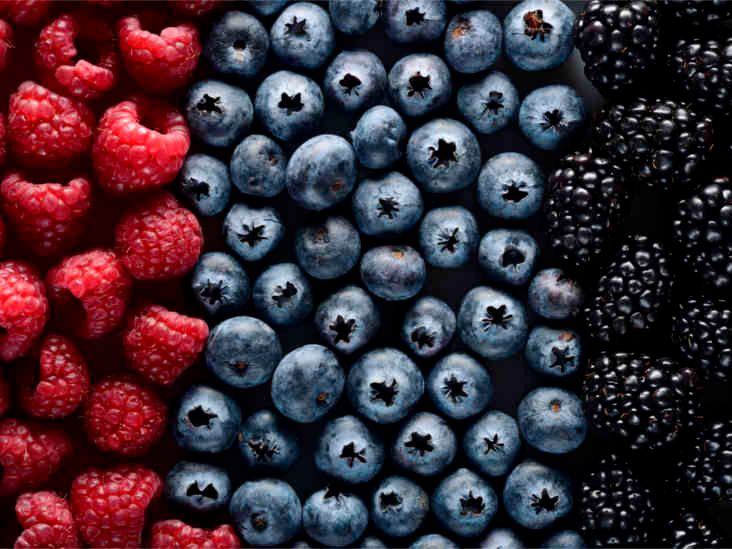
Berries
Berries such as blueberries, strawberries, raspberries, and blackberries provide fiber and a range of plant compounds.
They are easy to add to breakfast or snacks.
Healthline
Try adding berries to:
- Oatmeal
- Yogurt
- Smoothies
- Whole-grain cereal
- Chia pudding
Frozen berries can also be useful because they are convenient and can be stored for longer periods.
Apples
Apples contain fiber and can be an easy portable snack.
Eating a variety of fruits rather than focusing on one “best” fruit is a more useful strategy. Apples can be combined with foods such as peanut butter, plain yogurt, or a small handful of nuts.
If you tolerate apple skin well, keeping the skin on provides additional fiber.
Bananas
Bananas are convenient, inexpensive, and easy to add to meals.
They can be sliced into oatmeal, mixed into yogurt, blended into smoothies, or eaten as a snack.
Bananas also contain different types of carbohydrates depending on their ripeness. Less-ripe bananas contain more resistant starch, while ripening changes their carbohydrate structure.
Individual tolerance matters, especially for people with sensitive digestive systems.
9. Leafy Green Vegetables
Leafy greens such as spinach, kale, collard greens, and Swiss chard can contribute fiber, vitamins, minerals, and plant compounds to the diet.
They can be added to:
- Salads
- Soups
- Omelets
- Grain bowls
- Sandwiches
- Smoothies
You do not need to eat enormous amounts. Adding a serving to one or two meals can be a simple starting point.
Broccoli
Broccoli provides fiber and several nutrients while also adding variety to the diet.
Some people tolerate cooked broccoli better than raw broccoli, especially if they are sensitive to large amounts of high-fiber vegetables.
Try roasted broccoli with olive oil, steamed broccoli with a grain bowl, or chopped broccoli in a vegetable soup.
Brussels Sprouts
Brussels sprouts are another cruciferous vegetable that provides fiber and plant compounds.
Roasting them can make them easier and more enjoyable to include in meals.
A simple dinner could combine roasted Brussels sprouts with salmon, brown rice, and a side salad.
The goal is not to make every meal perfect. It is to consistently include a variety of nutritious foods.
Carrots
Carrots are an easy vegetable for people who want to increase their plant-food intake.
They can be eaten raw, roasted, steamed, or added to soups and stews.
Pairing carrots with hummus creates a simple snack that combines vegetables with a legume-based food.
Sweet Potatoes
Sweet potatoes provide fiber and other nutrients and can be used in many different meals.
Try baked sweet potatoes with beans and vegetables, roasted sweet potato cubes in a grain bowl, or mashed sweet potatoes as a side dish.
They can be a useful alternative to relying on refined carbohydrates at every meal.
Avocados
Avocados provide fiber and unsaturated fats.
They can be added to salads, whole-grain toast, grain bowls, or sandwiches.
Because food works as part of a larger pattern, avocado does not need to be eaten alone to provide value. Combining it with vegetables, legumes, whole grains, or other plant foods creates a more balanced meal.
Chia Seeds
Chia seeds are small but contain a substantial amount of fiber.
They can absorb liquid and form a gel-like texture, which makes them useful for overnight oats, yogurt bowls, smoothies, and chia pudding.
Start with a modest amount and drink enough fluid throughout the day, particularly if you are increasing your fiber intake.
Flaxseeds
Ground flaxseed provides fiber and plant-based omega-3 fatty acid ALA.
Ground flaxseed is generally easier to incorporate into meals than whole seeds because it can be mixed into foods more easily.
Try adding a spoonful to oatmeal, yogurt, smoothies, or homemade muffins.
Almonds and Other Nuts
Nuts can provide fiber, unsaturated fats, protein, vitamins, and minerals.
Almonds, walnuts, pistachios, and other nuts can fit into a balanced diet.
A small handful can be added to oatmeal, yogurt, salads, or eaten as a snack.
Choose varieties without excessive added sugar or salt when possible.
Whole Grains
Whole grains contain more of the grain’s original components than refined grains.
Examples include:
- Brown rice
- Oatmeal
- Barley
- Whole-grain bread
- Whole-grain pasta
- Quinoa
- Farro
Whole grains can contribute fiber to the diet, and dietary fiber is an important part of supporting gastrointestinal health.
Switching every refined grain to a whole grain overnight is not necessary. Start with one meal.
For example, replace white rice with brown rice a few times per week.
Barley
Barley is a fiber-rich whole grain that can work well in soups, salads, and grain bowls.
It has a chewy texture and can add variety to meals.
Pearled barley is more processed than hulled barley but is still a useful grain choice. The nutritional profile differs by processing, so readers should choose according to their dietary needs and preferences.
Sauerkraut
Sauerkraut is fermented cabbage.
Some traditionally fermented sauerkraut products may contain live microorganisms, but processing can affect whether live organisms remain in the finished product. Not every fermented food should automatically be labeled a probiotic food.
If you enjoy sauerkraut, use it as a side dish with meals rather than treating it as a miracle food.
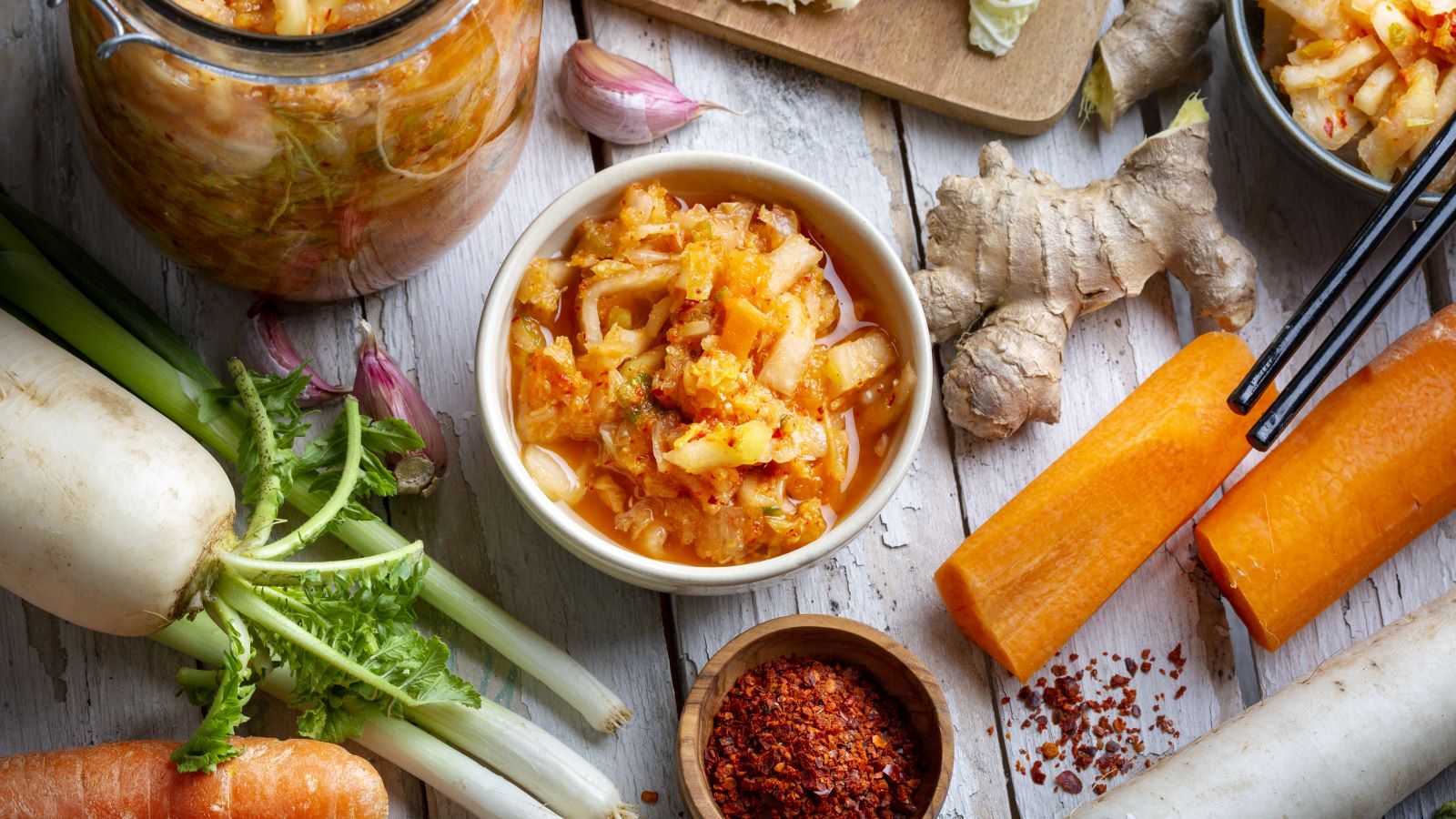
Kimchi
Kimchi is a fermented vegetable dish traditionally associated with Korean cuisine.
It can add vegetables, flavor, and fermented-food variety to meals.
However, kimchi can be high in sodium and may be spicy. People who need to limit sodium or who do not tolerate spicy foods should choose portions accordingly.
Kefir
Kefir is a fermented milk drink that can contain live microorganisms.
Some products are also available in lactose-free or non-dairy forms, although the microbial composition and nutritional profile can vary by product.
When buying kefir, check the nutrition label and ingredient list rather than assuming every product has identical benefits.
Onions
Onions contain fibers and plant compounds that can interact with gut microorganisms.
They can be used in soups, salads, sauces, stir-fries, and cooked meals.
However, onions can trigger digestive symptoms in some people, particularly those who are sensitive to certain fermentable carbohydrates. A food can be generally nutritious while still being poorly tolerated by a particular person.
Garlic
Garlic is another flavorful plant food that contributes compounds and can be part of a diverse diet.
It works well in soups, roasted vegetables, sauces, beans, and whole-grain dishes.
As with onions, some people with digestive sensitivities may find garlic difficult to tolerate.
Green Bananas and Resistant Starch Foods
Resistant starch is a type of carbohydrate that resists digestion in the small intestine and can reach the colon.
Some foods naturally contain resistant starch, and the amount can change depending on food type, ripeness, cooking, and cooling.
Green bananas, beans, and certain cooked-and-cooled starchy foods can provide resistant starch.
However, more is not always better. People with digestive sensitivity should introduce these foods gradually.
Extra-Virgin Olive Oil
Extra-virgin olive oil does not provide fiber, so it should not be considered a direct substitute for vegetables, fruits, legumes, or whole grains.
However, it can be a useful source of unsaturated fat in a plant-rich eating pattern.
For example, using olive oil in a salad can make vegetables more enjoyable, which may encourage greater vegetable intake.
This illustrates an important principle: healthy eating is often about combinations rather than isolated foods.
Whole Plant Foods as a Group
Perhaps the most important category is not one particular food at all.
It is the variety of whole and minimally processed plant foods in the overall diet.
Research on the diet–microbiome relationship emphasizes that whole dietary patterns can have substantial effects on the gut microbiome.
That means eating five different plant foods repeatedly may be less useful than gradually expanding the range of plants you eat.
You could rotate among:
- Beans
- Lentils
- Oats
- Whole grains
- Apples
- Berries
- Bananas
- Leafy greens
- Broccoli
- Carrots
- Sweet potatoes
- Nuts
- Seeds
Variety is a simple way to provide different fibers and plant compounds.
Why Fiber Is So Important for Gut Health
Fiber is one of the most important nutritional concepts when discussing the best foods for gut health.
Unlike many other carbohydrates, dietary fiber is not fully broken down and absorbed in the small intestine. Different fibers behave differently, and many can reach the colon.
Gut microorganisms can ferment certain fibers and produce metabolites, including short-chain fatty acids.
Fiber can also influence stool formation and intestinal transit.
This is why foods such as legumes, whole grains, fruits, vegetables, nuts, and seeds are frequently included in gut-friendly dietary patterns.
However, there is no universal fiber food that works best for everyone.
The type, amount, and combination of fiber matter, and people can respond differently.
How to Increase Fiber Without Feeling Miserable
Increase fiber slowly instead of making a sudden change. Eating large amounts of beans, raw vegetables, chia seeds, or lentils all at once may cause gas, bloating, or changes in bowel habits. A better approach is to add one fiber-rich food at a time and give your body time to adjust.
- Week 1: Add fruit to breakfast.
- Week 2: Add vegetables to lunch.
- Week 3: Choose whole grains more often.
- Week 4: Add beans or lentils to one meal.
Drink enough fluids throughout the day, too. Gradually increasing fiber can make it easier for your digestive system to adjust and help you build a healthier eating routine.
What Are Prebiotic Foods?
Prebiotics are substances that are used by microorganisms in ways that can provide a health benefit. Many prebiotic compounds are found in plant foods.
Foods that contain prebiotic fibers or related fermentable carbohydrates include certain vegetables, fruits, legumes, and whole grains.
Common examples include onions, garlic, asparagus, bananas, legumes, and whole grains.
However, the term “prebiotic” should not be treated as a synonym for “healthy food.” Not every food containing fermentable carbohydrates meets a strict scientific definition of a prebiotic.
The practical lesson is simple: eat a variety of plant foods instead of trying to build your entire diet around one prebiotic ingredient.
What Are Probiotics?
Probiotics are live microorganisms that, when consumed in adequate amounts, provide a health benefit.
This definition is important because not every fermented food is automatically a probiotic.
The NIH explains that probiotic benefits depend on specific microorganisms and strains. Some fermented foods contain live microorganisms but do not necessarily contain probiotic organisms with established benefits.
This is one reason consumers should be careful with marketing claims.
A product labeled “fermented” is not automatically a product with proven probiotic benefits.
Fermented Foods and Gut Health
Fermented foods have attracted considerable interest because fermentation can change food components and introduce microorganisms or microbial products.
Recent scientific reviews continue to investigate how fermented foods may influence the gut microbiome and gastrointestinal health. However, researchers also emphasize that human evidence is not equally strong for every fermented food or health outcome.
Good examples of fermented foods include:
- Yogurt
- Kefir
- Kimchi
- Sauerkraut
- Miso
- Some fermented vegetables
- Certain fermented dairy products
The safest practical approach is variety.
You do not need to consume several fermented foods every day.
Best Foods for Gut Health and the Mediterranean-Style Pattern
When thinking about gut health, it can be more useful to think about dietary patterns than isolated foods.
A Mediterranean-style eating pattern commonly emphasizes vegetables, fruits, legumes, whole grains, nuts, seeds, olive oil, and other minimally processed foods.
Research examining dietary patterns and the gut microbiome suggests that overall diet can have profound effects on microbial composition and function.
This does not mean everyone needs to follow one specific diet.
Instead, it demonstrates an important principle: many small food choices work together.
Foods That May Be Difficult for Some People
A nutritious food is not automatically suitable for every person.
Some people experience digestive symptoms after eating certain foods.
Possible triggers can include:
- Large amounts of beans
- Onions
- Garlic
- Certain dairy products
- Large amounts of cruciferous vegetables
- Certain wheat products
- Sugar alcohols
- Very high-fat meals
This does not mean these foods are unhealthy.
It means individual tolerance matters.
People with diagnosed digestive conditions may need individualized dietary guidance from a qualified healthcare professional or registered dietitian.
Should You Avoid Processed Foods Completely?
No, you do not need to avoid all processed foods to support gut health. Processing can make food safer, more convenient, and easier to store. The bigger concern is eating too many highly processed foods while getting too little fiber and nutrition from whole foods. Instead of focusing only on what to remove, think about what you can add to your meals.
- Add more vegetables and fruits.
- Choose beans and lentils more often.
- Include whole grains.
- Choose nutritious snacks.
- Drink enough water.
A balanced diet is more realistic than trying to completely eliminate processed foods.
Foods That May Be Less Helpful for a Gut-Friendly Diet
A diet that contains large amounts of highly processed foods, refined carbohydrates, added sugars, and excessive saturated fat may leave less room for fiber-rich whole foods.
Research examining Western-style dietary patterns has associated diets high in saturated fat and ultra-processed foods and low in fiber-rich plant foods with less favorable microbiome characteristics, although the relationship between diet, microbiome changes, and health is complex.
This does not mean you can never eat pizza, cookies, chips, or other processed foods.
A healthier goal is balance.
Think about what makes up most of your diet rather than judging one individual meal.
A Simple Gut-Friendly Breakfast
A simple breakfast might include:
- Plain yogurt
- Oats
- Blueberries
- Chia seeds
- Walnuts
This meal combines fermented dairy, whole grains, fruit, seeds, and nuts.
Another option is oatmeal topped with banana, ground flaxseed, and a small amount of peanut butter.
The important idea is diversity.

PharmEasy
A Simple Gut-Friendly Lunch
Try a grain bowl containing:
- Brown rice
- Chickpeas
- Spinach
- Carrots
- Tomatoes
- Avocado
- Olive oil
You can change the ingredients throughout the week.
For example, use lentils instead of chickpeas or quinoa instead of brown rice.
A Simple Gut-Friendly Dinner
A balanced dinner might include:
- Salmon or another protein source
- Roasted sweet potato
- Broccoli
- A side salad
- Olive oil-based dressing
Another option could be a bean and vegetable chili served with brown rice.
The goal is not perfection. The goal is to create meals that regularly include several food groups.
A Simple Gut-Friendly Snack
Good snack combinations include:
- Apple with peanut butter
- Berries with plain yogurt
- Carrots with hummus
- Banana with almonds
- Whole-grain crackers with hummus
- Chia pudding with fruit
Choose foods that fit your preferences and digestive tolerance.
How Much Variety Should You Eat?
There is no universally established number of different foods that every person must eat for a healthy gut.
Some popular online claims suggest specific numbers of plant foods per week, but these should not be treated as medical requirements.
A better goal is gradual variety.
If you currently eat very few fruits and vegetables, adding several new foods each week is meaningful progress.
You can rotate:
- Fruits
- Vegetables
- Beans
- Lentils
- Whole grains
- Nuts
- Seeds
- Herbs
- Fermented foods
Variety makes the diet more interesting and exposes the gut microbiome to different types of dietary components.
Gut Health Is About More Than Food
Food is important, but gut health does not exist in isolation.
Sleep, physical activity, stress, medications, hydration, alcohol intake, smoking, and other lifestyle factors can also influence health.
This means eating the best foods for gut health while regularly sleeping poorly and living with severe ongoing stress is not necessarily a complete wellness strategy.
A healthy lifestyle works as a system.
Focus on several areas rather than searching for one perfect food.
Can Gut Health Improve Quickly?
Some people notice changes in digestion after changing their diet, while others notice little immediate difference.
The response can depend on the individual, the foods being added, the amount of fiber, existing digestive conditions, and other factors.
The gut microbiome can respond to dietary changes, but that does not mean every change produces an immediate or noticeable health improvement. Research continues to investigate exactly how dietary changes translate into long-term outcomes.
Therefore, avoid promises of overnight transformation.
A consistent eating pattern is more realistic than a short-term “gut cleanse.”
Do Gut Cleanses Really Help?
There is no need to use extreme detox diets to support normal digestion.
The body already has systems for processing nutrients and removing waste.
Very restrictive cleanses can also make it harder to consume enough protein, fiber, vitamins, minerals, and calories.
A better approach is to focus on nutritious foods, adequate hydration, regular meals, and a balanced lifestyle.
What About Gut Health Supplements?
Supplements are widely marketed for digestive health.
Some may have specific uses, but more is not automatically better.
Probiotic supplements are especially complicated because different products contain different microorganisms and strains, and evidence for one strain cannot automatically be applied to another. The NIH emphasizes the importance of identifying probiotic microorganisms by genus, species, and strain when evaluating them.
For many healthy people, starting with a varied diet is a reasonable foundation.
Anyone considering supplements for a medical condition should discuss the choice with a qualified healthcare professional.
How to Shop for Gut-Friendly Foods
You do not need an expensive shopping list.
A basic grocery trip can include:
Produce
- Apples
- Bananas
- Berries
- Spinach
- Broccoli
- Carrots
- Sweet potatoes
- Onions, if tolerated
Protein and Fiber
- Black beans
- Chickpeas
- Lentils
- Plain yogurt
- Kefir
- Nuts
- Seeds
Whole Grains
- Oats
- Brown rice
- Barley
- Whole-grain bread
- Quinoa
Fermented Foods
- Yogurt with live cultures
- Kefir
- Kimchi
- Sauerkraut
- Miso
You can build many affordable meals from these foods.
How to Make Gut-Friendly Eating Affordable
Healthy eating does not have to be expensive.
Frozen vegetables and frozen berries can be practical alternatives to fresh produce.
Dried beans and lentils are often inexpensive sources of fiber and plant protein.
Oats are also affordable and easy to store.
Other budget-friendly choices include:
- Brown rice
- Bananas
- Apples
- Carrots
- Cabbage
- Potatoes
- Beans
- Lentils
- Peanut butter
- Whole-grain foods
Buying foods in season can also reduce costs.
The goal is not to purchase expensive “superfoods.” Many ordinary foods provide valuable nutrients and fiber.
Common Mistakes People Make About Gut Health
Focusing on One Superfood
No single food can provide everything your digestive system needs.
Increasing Fiber Too Quickly
A sudden change can cause temporary digestive discomfort.
Assuming Fermented Means Probiotic
Not every fermented food contains proven probiotic microorganisms.
Ignoring Personal Tolerance
A food that works well for one person may cause symptoms in another.
Buying Expensive Products
You do not need premium powders, drinks, or specialty foods to build a fiber-rich diet.
Expecting Immediate Results
Diet and gut health are long-term topics. Avoid unrealistic promises.
How to Build a Better Gut Health Routine
Start with breakfast.
Add fruit, oats, yogurt, or seeds.
At lunch, include at least one vegetable and a source of fiber such as beans or whole grains.
At dinner, aim for a combination of vegetables, protein, and a high-fiber carbohydrate.
For snacks, choose fruit, nuts, yogurt, or vegetables with hummus when these foods fit your needs.
Then gradually increase variety.
This approach is easier to maintain than following a strict diet for a few weeks and then returning to old habits.
A 7-Day Gut-Friendly Food Example
Day 1
Breakfast: Oatmeal with blueberries and walnuts.
Lunch: Chickpea salad with spinach and tomatoes.
Dinner: Salmon, roasted sweet potatoes, and broccoli.
Snack: Apple with peanut butter.
Day 2
Breakfast: Plain yogurt with banana, oats, and chia seeds.
Lunch: Lentil soup with a whole-grain side.
Dinner: Chicken, brown rice, and mixed vegetables.
Snack: Carrots with hummus.
Day 3
Breakfast: Whole-grain toast with avocado and fruit.
Lunch: Black bean grain bowl with vegetables.
Dinner: Baked fish, barley, and roasted vegetables.
Snack: Berries with yogurt.
Day 4
Breakfast: Overnight oats with strawberries and ground flaxseed.
Lunch: Lentil and vegetable salad.
Dinner: Bean chili with brown rice and vegetables.
Snack: Banana with almonds.
Day 5
Breakfast: Yogurt, oats, raspberries, and walnuts.
Lunch: Hummus and vegetable whole-grain wrap.
Dinner: Chicken, quinoa, spinach, and roasted carrots.
Snack: Apple.
Day 6
Breakfast: Oatmeal with banana and chia seeds.
Lunch: Chickpea and vegetable bowl.
Dinner: Salmon with barley and roasted Brussels sprouts.
Snack: Plain yogurt with berries.
Day 7
Breakfast: Whole-grain toast, avocado, and fruit.
Lunch: Bean and vegetable soup.
Dinner: Lentil bowl with brown rice and mixed vegetables.
Snack: Carrots with hummus.
This is only an example, not a medical diet plan. Portions and food choices should be adjusted according to individual energy needs, preferences, allergies, food intolerances, and health conditions.
When to Speak With a Healthcare Professional
Occasional digestive discomfort is common, but persistent or severe symptoms deserve attention.
Talk with a healthcare professional if you experience ongoing digestive problems or symptoms that concern you.
Seek medical guidance for issues such as persistent abdominal pain, unexplained weight loss, blood in the stool, repeated vomiting, persistent diarrhea, severe constipation, difficulty swallowing, or other significant changes in digestion.
People with diagnosed gastrointestinal conditions may also need individualized dietary advice.
A registered dietitian can help create a food plan based on your nutritional needs and tolerance.
The Most Important Lesson About the Best Foods for Gut Health
The phrase “best foods for gut health” can make it sound as if there is a competition between individual foods.
That is not really how nutrition works.
A healthier question is:
“What combination of foods can I eat regularly that provides fiber, nutrients, variety, and foods I tolerate well?”
That question leads to a much more useful answer.
Beans may be excellent for one person. Yogurt may be useful for another. Oats, berries, vegetables, whole grains, nuts, and seeds can all contribute to a varied diet.
The overall pattern matters more than any single ingredient.
Final Thoughts
The best foods for gut health are not necessarily expensive, unusual, or difficult to find. Many everyday foods can support a nutritious eating pattern, including oats, beans, lentils, fruits, vegetables, whole grains, nuts, seeds, yogurt, kefir, and other fermented foods. Dietary fiber is particularly important because many fibers reach the colon and interact with gut microorganisms. Fermented foods can also be useful additions, although not every fermented product contains probiotics with proven health benefits. The strongest approach is to focus on variety rather than a single “superfood.” Build meals around different plant foods, increase fiber gradually, choose foods you tolerate well, and maintain healthy habits over time. Most importantly, avoid unrealistic promises about gut cleanses or instant microbiome changes. Gut health is personal and complex, so people with persistent symptoms or medical conditions should seek individualized guidance from a qualified healthcare professional.
Frequently Asked Questions About the Best Foods for Gut Health
Is there one best food for gut health?
No. There is no single food that is best for everyone. A varied diet containing fiber-rich plant foods, whole grains, fruits, vegetables, legumes, nuts, seeds, and suitable fermented foods is generally a more useful approach than relying on one food.
Can I eat gut-friendly foods if I have a sensitive stomach?
Possibly, but tolerance varies. Foods such as beans, onions, garlic, and some high-fiber vegetables may cause symptoms in some people. Start with small portions and make changes gradually. If symptoms continue, speak with a healthcare professional.
Are expensive gut health products necessary?
Not usually. Many affordable foods, including oats, beans, lentils, bananas, apples, carrots, cabbage, and whole grains, can contribute fiber and nutrients to a balanced diet. Expensive powders and specialty products are not automatically better.
Is homemade fermented food always healthier?
No. Fermentation can be part of a nutritious diet, but homemade products need to be prepared safely. Fermented foods also vary greatly in their microorganisms and nutritional content. Not every fermented food provides proven probiotic benefits.
How long does it take to improve gut health?
There is no single timeline. Some people notice digestive changes after dietary adjustments, while others notice little immediate difference. The effects of diet on the gut microbiome are complex and can vary between individuals, so consistent healthy eating is a better goal than expecting rapid results.
Social Sharing
Your Content Goes Here
Latest Posts